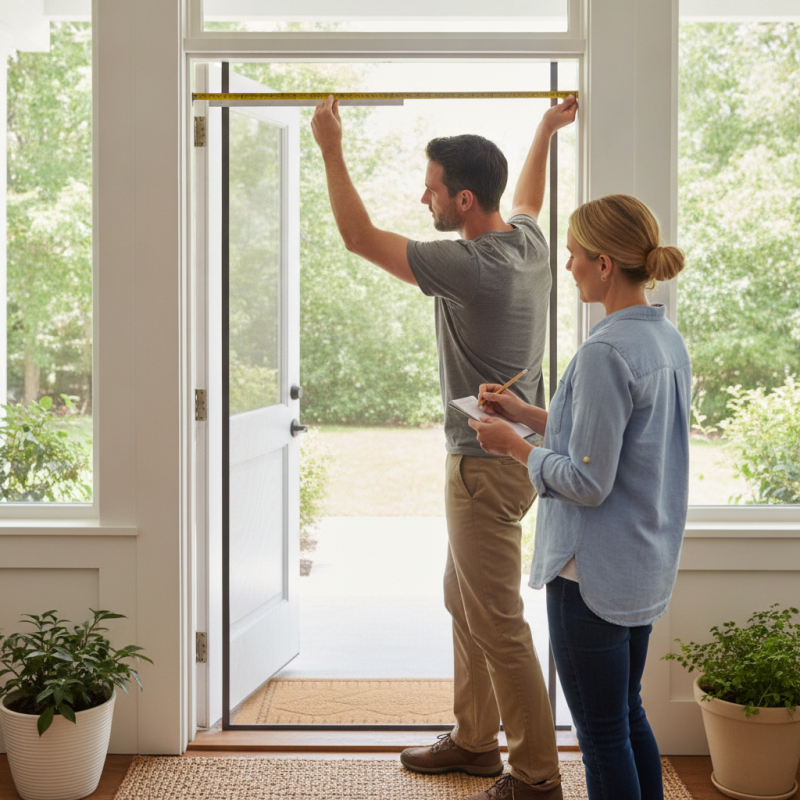
Choosing the right replacement screen door can be challenging. One of the most crucial steps is understanding how to measure for a replacement retractable screen door. Accurate measurements ensure a proper fit, preventing issues in installation and functionality.
It’s essential to measure carefully. A small mistake can lead to an ill-fitting door that may not close properly. Before you start, gather the necessary tools: a tape measure, pencil, and notepad. Take your time; rushing this process may result in missed details.
Consider the frame dimensions and the type of installation you want. Measuring the width and height can be straightforward, but remember to account for any obstructions. Sometimes, it’s easy to overlook small details, like hinges or thresholds, that can affect your measurements. Proper preparation and attention to detail are vital for success.
Understanding the Importance of Accurate Measurements for Screen Doors
Accurate measurements are crucial when replacing a screen door.
Professionals emphasize that even a quarter-inch error can lead to inadequate fitting.
This mistake can compromise energy efficiency and security.
The International Door Association highlights that poorly fitting doors can cause drafts, increasing energy costs by up to 30%.
Taking precise measurements ensures you avoid these pitfalls.
When measuring, start from the top of the door frame to determine the height.
Use a tape measure to find both the width and height at multiple points.
This method accounts for any variations in your frame.
Always record the smallest measurements for the best fit.
Tip: Keep the measuring tape straight. Any sagging can add inches to your measurement.
Another consideration is the door's swing direction. Knowing whether your door opens in or out can affect the style and size. Misjudging these aspects can complicate installation.
Tip: Check for obstructions. Ensure that nothing interferes with the door’s movement.
Taking the time to measure accurately will pay off in functionality and appearance.
Keep in mind that a small oversight can lead to a significant hassle later.
Gathering the Necessary Tools for Measuring a Replacement Screen Door
When replacing a screen door, having the right tools is essential. Accurate measurements lead to the perfect fit. You’ll need a
tape measure, pencil, and paper. These basic items often go unnoticed, but they significantly influence your success rate.
The National Association of Home Builders indicates that improper measurements result in up to 30% of replacement projects being unsuccessful. A tape measure helps ensure exact width and height. Be mindful of measuring from multiple points. The frame may not be completely square, which is a common issue.
Note down your measurements carefully. An industry report suggests that 20% of homeowners skip this step. This often results in ordering the wrong size. Periodically revisiting your steps can prevent unnecessary delays. Everyone makes mistakes, and rushing can lead to confusion. Take your time to double-check each measurement.
Step-by-Step Guide to Measuring the Width and Height of Your Door Frame
Measuring for a replacement screen door can seem daunting. However, the process becomes simple with the right steps. It's essential to measure both the width and height of your door frame accurately.
Begin by using a tape measure. Measure the width at the top, middle, and bottom of the door frame. Record the narrowest width. Next, measure the height on the left, middle, and right side. Again, take note of the shortest height. This ensures your new door will fit snugly.
**Tips:** Always double-check your measurements. Mistakes can be costly and frustrating. Also, consider the installation method. Some frames require extra space for hardware. If your frame shows wear or damage, plan for possible adjustments.
If you find your measurements don’t align, reflect on your approach. Rethink the tools you used or whether you measured from the right points. Accurate measurements are crucial for a seamless fit. Ensure that your new door suits your home’s aesthetics while maintaining functionality.
Accounting for Clearances and Adjustments During Measurement Process
When measuring for a replacement screen door, it's crucial to account for clearances and adjustments. The space around your door is often overlooked. A precise measurement includes considering the frame. If you measure too tightly, the door might not function correctly. A gap is essential. It allows for natural expansion and contraction of materials.
Ensure you measure at the top, middle, and bottom of the door frame. The dimensions may vary slightly. Always use a level when checking for evenness. This ensures a proper fit, preventing alignment issues later. Sometimes, walls can be uneven or doors slightly warped, making adjustments necessary.
**Tips:**
- Always leave about a quarter-inch clearance at the sides and top.
- Double-check your measurements before making any cuts or purchases.
- Keep a notepad handy to jot down dimensions.
Missing these details can result in frustrations during installation. It's easy to overlook small discrepancies. But, taking your time and being thorough can lead to a successful screen door replacement.
Replacement Screen Door Measurement Adjustments
Finalizing Your Measurements and Choosing the Right Replacement Screen Door
When finalizing your measurements for a replacement screen door, precision is crucial. Start by measuring the height and width of your existing door frame. Use a tape measure, ensuring it is straight and snug against the frame. Record the dimensions in inches. It's best to take multiple measurements. Sometimes frames are not perfectly square. A small mistake can lead to a poor fit.
Next, consider the type of replacement screen door you want. Do you prefer a sliding, hinged, or retractable door? Each option has different requirements. Also, think about the material. Screens can be made of fiberglass, aluminum, or vinyl. Each offers various levels of strength and insulation. Understanding your needs will guide your choice. Sometimes specific designs work better for certain frames.
Reflect on aesthetics and functionality. A well-fitting door will enhance both the look and the comfort of your home. Check for local building codes or regulations, as they may affect your choice. Get a second opinion for your measurements if you're unsure. This can reduce the chance of errors. Making a careful decision now will save you time and hassle later.
How to Properly Measure for a Replacement Screen Door? - Finalizing Your Measurements and Choosing the Right Replacement Screen Door
| Measurement Dimension |
Recommended Method |
Notes |
| Width |
Measure the top, middle, and bottom width of the opening. Use the smallest width |
Ensure the door frame is square |
| Height |
Measure the left, center, and right height of the opening. Use the smallest measurement |
Check for any obstructions |
| Depth |
Measure the depth of the door frame |
Important for selecting the right screen door thickness |
| Hinge Placement |
Measure the distance from the top and bottom of the frame to the hinge |
Verify if the screen door swings in or out |
| Handle Height |
Measure from the ground to the handle position on the existing door |
Standard height is 36-42 inches |
Conclusion
Accurate measurements are crucial when considering a replacement screen door, as they ensure the perfect fit for your space and functionality. In the article "How to Properly Measure for a Replacement Screen Door," readers are guided through a comprehensive process that begins with understanding the significance of precise measurements. This involves gathering essential tools needed for the task and following a step-by-step guide to measure the width and height of the door frame.
Additionally, the article emphasizes the importance of accounting for clearances and adjustments during the measurement process to accommodate any variations in the frame. Finally, it concludes by advising readers on how to finalize their measurements to choose the right replacement screen door, ultimately addressing the question of "How to measure for a replacement retractable screen door" with clarity and precision.
 Slander Door