Slander Door Slander Door

7 Best Hidden Pivot Door Benefits for Minimalist Design

Time:2026-11-08 Author:Ethan
0%

A hidden pivot door can make a minimalist room feel calmer by reducing visible frames, hinges, and hardware. Instead of interrupting a wall, the door can sit nearly flush with its surface. The effect is subtle. A painted panel may blend into a white hallway, while a walnut veneer can continue the grain across a living-room entrance. These details matter most where sightlines are clear and clutter is limited.

What are the benefits of a hidden pivot door for minimalism? This guide explores seven practical advantages, including cleaner lines, flexible placement, and a stronger sense of visual continuity. It also looks at real design considerations: pivot hardware needs accurate installation, the door requires suitable clearance, and heavy panels may call for professional assessment. A concealed look does not mean a simple project. Measurements, wall construction, and the door’s weight all affect how well it works.

There is a trade-off. A pivot door can be striking, but it may not suit every floor plan or budget. It can also feel less intuitive to guests if its opening edge is hard to spot. Worth considering. The best minimalist choice is not always the most invisible one; it is the one that makes daily movement feel natural while keeping the room’s design intentional.
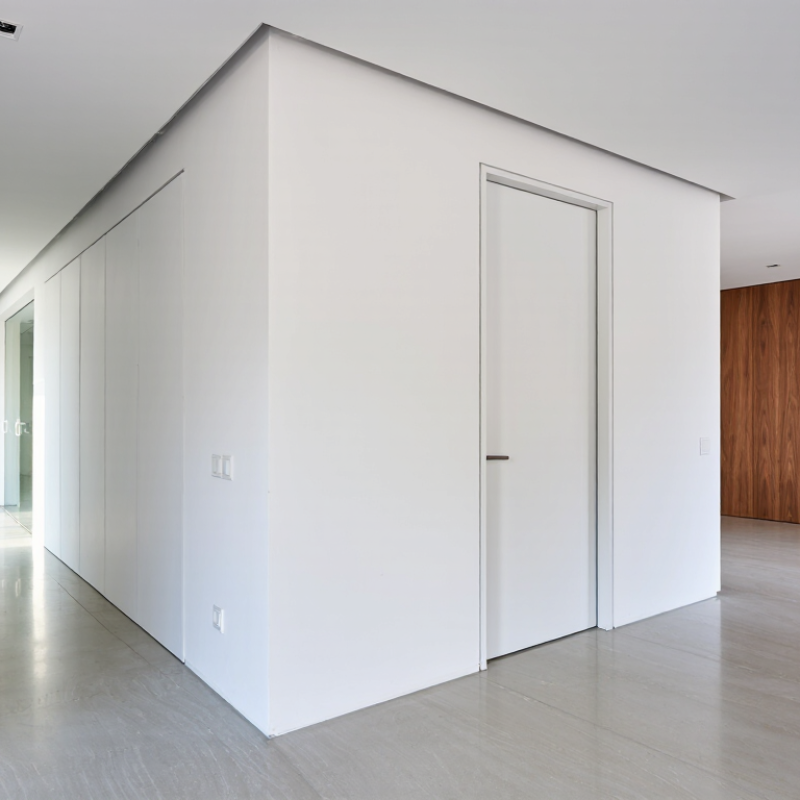
7 Best Hidden Pivot Door Benefits for Minimalist Design

What Defines a Hidden Pivot Door in Minimalist Design

A hidden pivot door rotates on concealed hardware rather than visible side hinges. Its pivot may sit near the jamb or farther into the door leaf. That changes the swing. In minimalist design, the closed door can align with the wall, leaving a broad, uninterrupted surface. The effect depends on careful detailing, not just hidden hardware.

Unlike a standard hinged door, a pivot door may need clearance on both sides of its axis. The frame, floor finish, and handle must be planned together. A flush pull and narrow shadow gap keep visual clutter low, while a poorly aligned reveal can make the door stand out more than expected. Small tolerances matter.

The 2024 U.S. Houzz & Home Study found that 54% of surveyed homeowners renovated in 2023. This indicates renovation activity, not demand for pivot doors, so it should not be read as a door-sales statistic. For a real project, check the manufacturer’s technical drawings and test the swing against nearby furniture. The detail is easy to underestimate.

How Concealed Pivot Hardware Creates Clean Visual Lines

A minimalist room can feel calmer when the door does not announce itself. Concealed pivot hardware lets the panel sit close to the surrounding wall, with no side hinges interrupting the edge. The eye follows a long, quiet plane instead of stopping at metal knuckles or bulky trim. In a pale oak hallway, for example, a flush door can read almost like another wall panel. Less visual noise. The pivot also changes the opening’s movement, but it does not guarantee a perfect seam. Accurate framing, door weight, and consistent reveals matter; small alignment errors show clearly on a plain surface.

Tips: Confirm the floor and ceiling can accept the pivot fittings before choosing the door. Ask for the required clearances and a sample reveal detail. Check the swing path against nearby lights, furniture, and skirting boards.

This visual restraint can support a more considered renovation. The National Association of Realtors and the National Association of the Remodeling Industry reported in their 2022 Remodeling Impact Report that 83% of homeowners had a greater desire to be home after remodeling. A hidden pivot door is only one small design choice, not a guarantee of that feeling. Still, when its lines align with wall panels and adjacent trim, it can make a compact entry feel less fragmented. The hardware may disappear; the installation details should not.

How Pivot Doors Improve Space, Access, and Natural Light

A hidden pivot door can keep a minimalist room visually calm while improving the route between spaces. Its flush finish reduces interruptions across a wall, and a wider leaf can make moving furniture less awkward. The pivot position matters. An offset pivot may reduce the door’s swing into a room, but the leaf still needs clearance. Not a space-saving trick by itself. Check the swing against nearby furniture and measure the clear opening before choosing hardware. U.S. Access Board guidance specifies a 32-inch minimum clear opening for accessible doorways; a door’s nominal width does not guarantee that usable space.

Natural light needs a deliberate opening, not just a clever hinge. A glazed panel or adjoining transom can carry daylight into a darker hall while preserving a clean wall line. A 2014 Northwestern University study found that office workers with windows slept an average of 46 minutes more each night. The World Green Building Council’s Health, Wellbeing and Productivity in Offices report discusses the finding, but it does not prove the same effect in homes. Glazing also trades privacy for light. Frosted glass may soften views, though it can make a narrow passage feel less connected. Test samples in morning and evening light; finishes can look unexpectedly cool.

7 Best Hidden Pivot Door Benefits for Minimalist Design

How pivot doors can improve space, access, and natural light

Hidden pivot doors can create a clean wall plane, accommodate broad openings, and support brighter interiors when glazed. Ratings are qualitative design assessments, not measured performance data; outcomes depend on the door, hardware, glazing, and room layout.

Seven Design and Functional Benefits of Hidden Pivot Doors

Hidden pivot doors offer seven practical benefits for minimalist interiors. Their concealed hardware reduces visual clutter, while flush faces keep wall lines calm. The pivot action can support broad, tall leaves that feel architectural. A single panel may also create a more generous transition between rooms. Finishes can continue across the door and surrounding wall. That visual continuity helps small rooms feel less interrupted. Some designs can open in both directions, improving circulation where the hardware allows it.

Function still matters. Pivot placement changes the swing path, so check furniture, rugs, and nearby switches before ordering. Where accessibility rules apply, the U.S. Access Board’s ADA Standards specify a 32-inch minimum clear opening for many doorways; measure the actual opening, not the leaf width. Concealed pivots also need suitable floor and head support, especially with heavy panels. Ask the installer to confirm the structure and hardware capacity. A clean detail can hide real complexity.

A well-adjusted pivot can move smoothly and quietly, with fewer visible hinges to interrupt the surface. It can also make a room divider feel lighter, even when the door itself is substantial. Still, not every room needs one. The pivot axis may reduce usable clearance on one side, and poor installation can cause rubbing. Less visual noise. More planning.

7 Best Hidden Pivot Door Benefits for Minimalist Design — Seven Design and Functional Benefits of Hidden Pivot Doors

Benefit How It Helps Practical Consideration
1. Cleaner visual lines With suitable concealed hardware and a flush installation, the door can sit more quietly within a wall, supporting a simple, uncluttered interior. The result depends on the door, frame, hardware, and finish being coordinated; seams and clearances may still be visible.
2. Flexible pivot placement A pivot can be positioned away from the door edge, changing the way the panel opens and creating a distinctive architectural effect. Pivot position affects the door’s swing path and opening width, so it should be planned around nearby walls, furniture, and circulation.
3. Support for larger door designs Some pivot systems are designed for larger or heavier panels than many conventional butt-hinge setups. Capacity is specific to the hardware and installation. Confirm the permitted door dimensions, weight, materials, and fixing requirements with the system specifications.
4. A distinctive opening experience The offset pivot creates a different movement from a typical side-hinged door and can make an entrance feel deliberate and architectural. Opening direction, swing angle, and whether the door can swing both ways vary by hardware model and project design.
5. More design freedom for finishes A pivot arrangement can accommodate a range of door-face treatments, helping the panel relate to nearby walls or interior materials. Added finish layers affect door weight and thickness. Check compatibility and clearances before fabrication.
6. Potentially fewer visible fittings When the pivot components are concealed, the door face can remain free of prominent conventional hinges. Some systems still require visible handles, edge details, or floor and head components. “Hidden” does not mean every part is invisible.
7. A practical option for feature openings Pivot doors can suit entrances where a broad panel or a carefully controlled swing is part of the architectural concept. Accurate alignment and suitable structural support are important. Professional measurement and installation help the door operate as intended.

Key Factors for Selecting and Installing a Hidden Pivot Door

Selecting a hidden pivot door starts with the opening, not the finish. Confirm wall depth, finished-floor height, ceiling clearance, and the panel’s weight before ordering. An offset pivot can help a wide door clear nearby walls. It can also reduce the usable opening.

The 2010 ADA Standards for Accessible Design specify a 32-inch minimum clear opening for accessible doors. Use that figure as an early planning check, not proof that the entire doorway meets accessibility requirements.

Measure twice. Ask the installer to verify that the pivot hardware and supporting structure are rated for the finished panel’s weight. A heavy door may need reinforcement inside the wall or floor. Confirm the floor can accept the pivot fitting, and check that flooring will not obstruct the swing.

Request a shop drawing showing the pivot position, clear opening, and door arc. During installation, test the door at several angles and listen for rubbing or clicking. Small gaps matter. One detail is easy to miss: a flush floor fitting can still catch dust and debris. Plan access for cleaning, even if the detail slightly interrupts the minimalist look.

FAQS

How can a hidden pivot door make a room feel calmer?

Its flush face and concealed hardware reduce visual interruptions. The wall line stays quieter.

Does a pivot door always save space?

No. The door still needs room to swing, and its pivot position affects clearance. Check nearby chairs, rugs, and switches.

How can a pivot door bring daylight into a hallway?

A glazed panel or transom can carry light from a brighter room. Frosted glass softens views but reduces privacy. Test a sample at different times.

What opening width should I plan for?

Measure the clear opening, not just the door panel. A 32-inch clear opening is a useful accessibility planning reference. The frame and swing can change the usable space.

What should be checked before ordering a heavy door?

Confirm the panel’s finished weight, floor support, and head support with the installer. A shop drawing should show the pivot point and swing arc. Small gaps matter.

Can a pivot door open in both directions?

Some hardware allows it, but the doorway and surrounding layout must suit that movement. Test the path around furniture before choosing.

What maintenance details are easy to overlook?

A floor fitting can collect dust even when it sits flush. Leave room to clean it. Not perfect, but practical.

Is a hidden pivot door right for every room?

Not necessarily. It can create a broad, elegant opening, but poor installation may cause rubbing or clicking. A quieter wall is nice; the planning is less glamorous.

Conclusion

A hidden pivot door uses concealed hardware and a central or offset pivot point to open smoothly without the visual bulk of conventional hinges. By keeping the frame, handle, and mechanism discreet, it creates uninterrupted surfaces and clean visual lines that suit minimalist interiors. What are the benefits of a hidden pivot door for minimalism? It can reduce visual clutter while bringing a refined, architectural feel to a room.

Depending on its size and placement, a pivot door can also create a generous passage, improve access, and help natural light move between spaces. Its seven key advantages include a streamlined appearance, flexible design options, smooth operation, efficient use of space, wider openings, improved light flow, and a distinctive focal point. Choosing one requires attention to the door’s weight, dimensions, materials, pivot placement, floor and ceiling conditions, and installation accuracy. Careful planning helps ensure the door operates safely and complements the surrounding design.

Ethan

Ethan

Ethan is a seasoned marketing professional with a deep expertise in our company's innovative product line. With a passion for sharing knowledge and insights, he takes the lead in regularly updating our corporate blog, where he explores industry trends, product features, and effective marketing......