Slander Door
When considering architectural choices, a pivotal question arises: "What is the difference between a pivot door and a hinge door?" Renowned architect John Smith, known for his expertise in modern design, once stated, "The type of door you choose can redefine the entire entrance experience."
Understanding the distinctions between these two door types is essential for making an informed decision. A pivot door rotates on a spindle rather than relying on traditional hinges. This allows for larger and heavier designs, which can create a striking first impression. In contrast, hinge doors are more common and consist of a simpler mechanism that can limit size and style.
Each door type presents unique advantages and challenges. While pivot doors offer a modern aesthetic, they may require more space for clearance. Hinge doors are easier to install but may not capture the same bold appeal. Evaluating these factors requires reflection on both practicality and design intent.
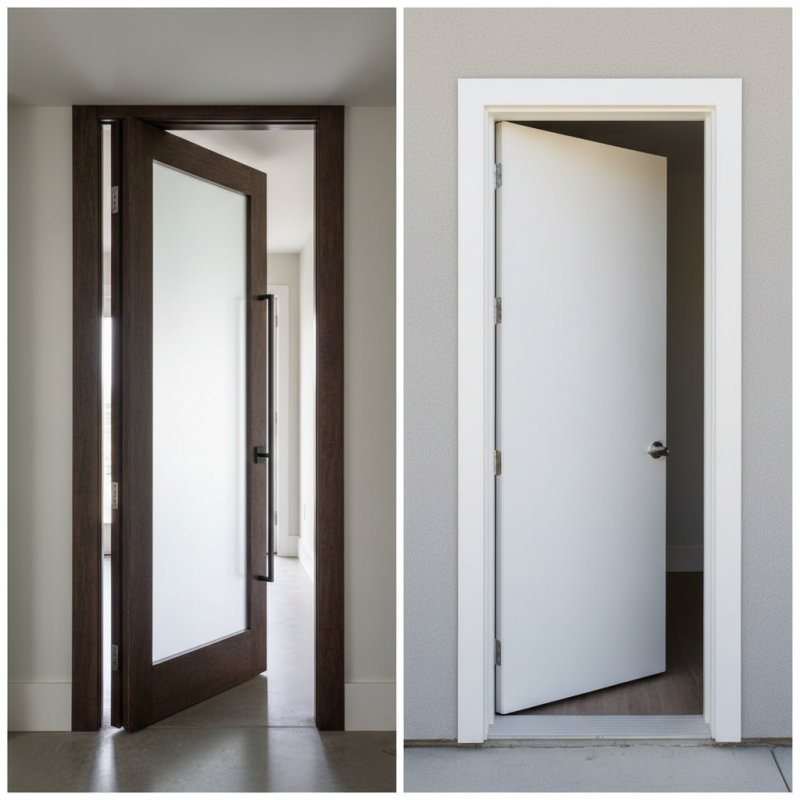
When choosing between pivot doors and hinge doors, it's crucial to understand their distinct designs. Pivot doors rotate on a central point rather than being attached to a side frame. This allows for larger panels and a more dramatic entrance. Homeowners often select pivot doors for their modern aesthetic and versatility. They can open in both directions, providing better flow in open spaces.
Hinge doors are more traditional. They rely on hinges mounted to one side of the frame. This design is stable and available in various styles. Hinge doors typically open inward or outward, limiting design choices. Many older homes showcase these doors, highlighting their classic appeal. However, they can feel restrictive in larger spaces.
Both types have unique benefits. Pivot doors offer a contemporary look and fluid movement. Hinge doors provide reliability and ease of maintenance. It’s essential to consider the space, aesthetics, and function before deciding. What works for one home may not suit another. Balancing style with practicality is a personal choice that requires reflection.
Hinge doors are a popular choice in both residential and commercial spaces. They consist of a door panel attached to a frame by hinges. This design allows the door to swing open and closed freely. The simplicity of hinge doors makes them easy to install and operate. Homeowners can find various styles and materials, from wood to metal.
However, hinge doors do have limitations. They typically require more space to open than ***pivot doors***. This can be a challenge in smaller rooms or tight hallways. Additionally, the hinges themselves may wear out over time, leading to **squeaks** and **misalignment**. Maintaining hinge doors is crucial to ensure they function properly.
The design of hinge doors also influences their aesthetic appeal. They can fit into traditional or modern décor seamlessly. Still, there’s a risk of them becoming too plain or generic if not selected thoughtfully. A well-chosen hinge door can enhance the overall look of a room, but a poorly designed one might detract from it. Careful selection and regular maintenance of hinge doors contribute to a longer lifespan and better functionality.
Pivot doors offer a unique mechanism compared to traditional hinge doors. Unlike hinge doors that swing on a fixed axis, pivot doors rotate on a pivot point. This allows them to be larger and heavier without compromising functionality. The design creates a modern aesthetic, perfect for contemporary homes.
The mechanism of pivot doors is relatively simpler than it seems. They rely on a top and bottom pivot system that supports the door. This system enables smooth opening and closing. The pivoting motion allows for greater versatility in design. However, this mechanism can sometimes lead to alignment issues over time. Regular maintenance is essential for optimal performance.
In addition, the weight distribution of pivot doors can create challenges. If not installed properly, they might sag. This can affect their operation and appearance. When considering a pivot door, one must ensure precise installation. It's crucial to have reliable hardware and a professional assessment.
When comparing hinge doors and pivot doors, it's essential to consider their benefits. Hinge doors have been a reliable choice for years. They are simple and easy to install. Hinge doors open and close smoothly, making them user-friendly. They often come in various designs, fitting different styles of homes.
Pivot doors, on the other hand, offer a modern twist. Their sleek design stands out beautifully. Unlike hinges, these doors pivot on a point rather than a side. This allows for larger door panels. This feature can create impressive entrances. However, installation can be more complex. Proper alignment is crucial for functionality.
Both types have their pros and cons. Hinge doors are budget-friendly and easy to maintain. However, they require space for opening. Pivot doors can save space when utilized correctly. Yet, they might need professional installation. Understanding these differences can help make an informed choice.
Pivot doors and hinge doors serve unique purposes in construction and design. A pivot door rotates on a pivot point, allowing for larger and heavier designs. This makes them popular in modern architecture, often used as statement entrances in commercial buildings. They can create a grand entrance, offering an impressive visual appeal.
On the other hand, hinge doors are more traditional. They pivot on a set of hinges attached to a frame. They are prevalent in both residential and commercial settings. Their ease of installation and lower cost make them accessible for various applications. They work well in smaller spaces where a grand entrance is not necessary.
The choice between these two types often depends on the intended use. For large office spaces or open layouts, pivot doors might be ideal. Conversely, hinge doors fit well in homes or smaller rooms with standard door frames. Many people overlook the details, such as door materials and finishes, which can impact functionality and aesthetics. Each door type has its pros and cons, and it’s worth considering your specific requirements before making a decision.
| Dimension | Pivot Door | Hinge Door |
|---|---|---|
| Operation | Rotates on a pivot point | Rotates on hinges |
| Load Bearing | Handles heavy loads well | Limited by hinge strength |
| Design Flexibility | Customizable in size and shape | Standard sizes and designs |
| Space Efficiency | Requires less space to open | Requires more clearance space |
| Typical Applications | Modern interiors, commercial buildings | Residential homes, traditional settings |
| Installation Complexity | Typically more complex | Easier to install |
: Pivot doors rotate on a pivot point, while hinge doors swing on fixed hinges.
Pivot doors create a modern look, making them ideal for contemporary homes and impressive entrances.
Pivot doors require regular maintenance to avoid alignment issues, making them potentially harder to maintain.
Yes, pivot doors can be larger and heavier, but they need proper installation to avoid sagging.
They are popular in modern architecture for commercial buildings, often serving as standout entrances.
Yes, hinge doors are generally more affordable and easier to install in smaller spaces.
Many overlook the details like door materials and finishes, which can affect both function and appearance.
Improper installation can lead to sagging, affecting both the door's function and its appearance.
Yes, precise installation is crucial to ensure proper function and aesthetics for pivot doors.
People often choose without considering their specific space needs and design preferences, which can lead to regrets.
When considering the choice between a pivot door and a hinge door, it is essential to understand their fundamental differences and functionalities. What is the difference between a pivot door and a hinge door? Hinge doors operate on a side-mounted mechanism, allowing them to swing open and closed along a fixed axis, making them suitable for standard residential and commercial applications. In contrast, pivot doors are designed to rotate on a pivot point, usually located at the top and bottom of the door, enabling a larger entryway and a more modern aesthetic, which is increasingly favored in contemporary architecture.
Both types of doors offer unique advantages depending on the specific requirements of the space. Hinge doors are often more straightforward to install and maintain, whereas pivot doors allow for greater design flexibility and can accommodate heavier materials. Understanding these differences, along with their respective applications, can help in selecting the right door style for your project needs.
