Slander Door Slander Door

How to Choose Best Glass for Frameless Partition Doors 2026?

Time:2026-10-10 Author:Liam
0%

Choosing glass for a frameless partition door is not simply a style decision. It affects safety, privacy, daylight, acoustics, maintenance, and long-term comfort. The real question is: How to choose the right glass for a frameless partition door when every room has different risks and expectations?

Industry guidance provides a reliable starting point. The International Energy Agency’s 2023 Global Status Report states that buildings consume about 30% of global final energy. Glass selection can support daylighting, although internal partitions cannot solve energy performance alone. The National Fenestration Rating Council also emphasizes measured performance, including visible transmittance and solar heat gain. These values help professionals compare products instead of trusting appearance alone. For safety, specifications should reference recognized standards such as ANSI Z97.1, CPSC 16 CFR 1201, or EN 12150, depending on the project location. Local building requirements still control the final decision.

Tempered glass is common. Laminated glass adds retention after breakage and can improve acoustic control. Low-iron glass offers clearer edges, but fingerprints may become more noticeable. Frosted films provide privacy, yet poorly installed films can peel around handles and corners. I have seen elegant doors become difficult to use because the selected glass was too heavy for the hardware. That mistake is easy to overlook.

There is no universal “best” panel. Measure the opening, door weight, impact exposure, privacy target, and cleaning routine first. Confirm the complete system with a qualified glass specialist. A perfect-looking sample can still perform poorly in daily use.
How to Choose Best Glass for Frameless Partition Doors 2026?

Glass Types and Their Suitability for Frameless Partition Doors

How to Choose Best Glass for Frameless Partition Doors 2026?

Glass selection determines more than appearance. It affects safety, privacy, weight, and hardware performance. In professional site inspections, I often find that attractive glass is chosen before checking door size and hinge capacity. That order can create costly problems.

Tempered glass is a practical choice for many interior frameless doors. It is stronger than ordinary annealed glass and breaks into smaller, less dangerous pieces. It suits offices, meeting rooms, and retail interiors with moderate privacy needs. Laminated glass offers another safety advantage. Its inner layer helps hold fragments together after breakage. It can also improve sound control, although results depend on thickness and the surrounding wall.

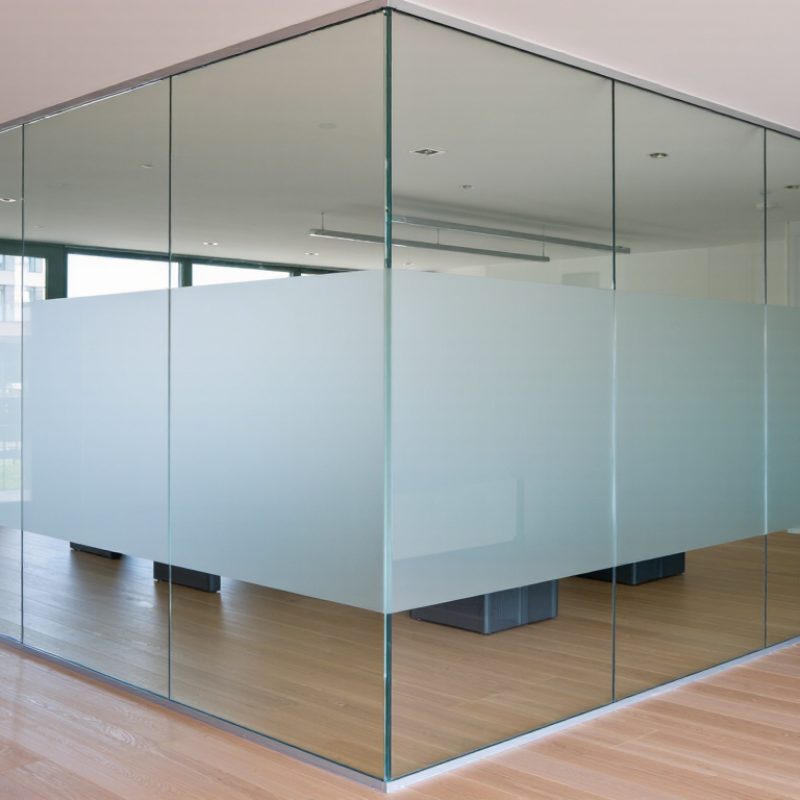
Low-iron glass provides a cleaner, brighter view with less green color at the edges. It works well where daylight and visual openness matter. Frosted or acid-etched glass is better for changing rooms, bathrooms, and private work areas. Textured patterns can hide fingerprints, but heavy patterns may reduce natural light. Not every option works everywhere.

Door size matters greatly. A thick laminated panel may exceed the safe load of light hardware. Tempered glass can still fail if edges are damaged during installation. A qualified glass professional should check panel dimensions, edge quality, hinge spacing, and fixing details before fabrication. Acoustic glass sounds impressive, but a poor frame connection can weaken its real performance. There is no perfect glass type. The best choice depends on use, privacy, safety, and installation accuracy.

Key Factors for Choosing Door Glass in 2026

How to Choose Best Glass for Frameless Partition Doors 2026?

Key Factors for Choosing Door Glass in 2026

Glass selection should begin with safety, not appearance. Tempered glass offers stronger impact resistance and breaks into smaller fragments. Laminated glass holds together after cracking, improving post-breakage protection. For frameless doors, confirm compliance with applicable safety-glazing standards, such as ANSI Z97.1 or EN 12150. Door holes, edge polishing, and hardware loads also require professional checking. Small installation errors can create dangerous stress points.

Acoustic performance matters in offices, clinics, and hotel interiors. Ask suppliers for tested sound-reduction data, not general claims. Laminated acoustic glass can reduce speech transfer more effectively than ordinary monolithic glass. Yet results depend on seals, floor gaps, and the surrounding partition. A premium panel cannot fix a poorly sealed doorway. That detail is often missed.

Energy and comfort deserve attention in 2026. The 2024 Global Status Report for Buildings and Construction states that buildings consumed about 32% of global energy and produced roughly 34% of energy-related carbon emissions in 2022. Interior doors contribute less than façades, but daylight and thermal comfort still influence design decisions. Low-iron glass improves visible light and color clarity. Solar-control coatings may help near sunlit corridors, though they can slightly reduce transparency. I would not choose the darkest glass automatically. It may improve privacy, but it can make narrow spaces feel colder and less welcoming. Use measured light transmission, acoustic test results, safety certification, and hardware compatibility before approving the final specification.

Safety, Strength, and Compliance Requirements

How to Choose Best Glass for Frameless Partition Doors 2026?

Safety, Strength, and Compliance Requirements

Choosing glass for a frameless partition door requires more than checking appearance and price. Safety comes first. Tempered glass offers strong impact resistance and breaks into smaller pieces. Laminated glass holds fragments together after breakage. For busy offices, laminated safety glass may provide better injury control and sound reduction. The final choice depends on door size, location, usage, and local requirements.

Glass alone is not enough. A qualified glazier should check thickness, panel dimensions, edge quality, hinges, locks, and floor clearances as one system. A small chip near an edge can become a serious weakness. I have seen installations fail because the hardware was selected after the glass. Measure twice. The frame-free design still needs accurate tolerances and properly prepared holes.

Compliance must be verified before fabrication. Many jurisdictions require safety glazing in doors and areas vulnerable to human impact. Ask for documented testing, permanent safety markings, and installation records. Requirements can differ for fire separation, accessibility, wind loads, and acoustic performance. Do not rely on a generic “strong glass” claim. Request technical data and consult the local building authority when the project is uncertain.

No glass choice is perfect. A thinner panel may look elegant, yet it can flex noticeably during daily use. That detail is easy to overlook.

Comparing Privacy, Light Control, and Aesthetic Options

How to Choose Best Glass for Frameless Partition Doors 2026?

When selecting glass for frameless partition doors, privacy should match the room’s actual use. In office meeting rooms, lightly frosted glass can hide faces while preserving daylight. For bathrooms or changing areas, stronger obscurity is usually more appropriate. Clear tempered glass offers openness, but it reveals fingerprints, cables, and clutter quickly. Laminated glass can improve acoustic separation and hold fragments together after breakage. Always confirm local safety requirements with a qualified installer.

Light control changes throughout the day. A south-facing corridor may become uncomfortable with fully clear panels. Low-iron glass gives brighter, cleaner views, yet it can increase glare. Tinted or patterned glass reduces visual intensity, though it may alter interior colors. I usually compare full-size samples beside the actual wall finishes. Small samples can be misleading. Switchable privacy glass offers flexible control, but its wiring, controls, and maintenance deserve careful planning.

Aesthetic choices should support the architecture rather than compete with it. Acid-etched surfaces create a soft, consistent appearance, while textured patterns add depth and conceal marks. Vertical lines can make a door feel taller. Dark borders may emphasize the frameless design, even when the glass remains visually light. In one project, a delicate pattern looked elegant in drawings but felt busy after installation. That mistake taught me to inspect samples from both sides, under daytime and evening lighting. Clean edges matter. Scratches and uneven frosting become obvious near handles.

How to Choose Best Glass for Frameless Partition Doors 2026? - Comparing Privacy, Light Control, and Aesthetic Options

Glass Type Typical Visible Light Transmission Privacy Level Light Control Visual Character Typical Thickness for Doors Best Applications
Clear Tempered Glass About 88–91% Low Minimal glare and solar control Maximum transparency; neutral appearance 10–12 mm Meeting rooms, offices, studios, and areas where openness and borrowed daylight are priorities.
Clear Laminated Glass About 86–90% Low Minimal light filtering Clear, with a possible subtle interlayer tint Approximately 10.8–13.5 mm Projects requiring retained glass after breakage, improved acoustic performance, or enhanced impact protection.
Frosted / Acid-Etched Glass About 70–85% Medium to high Diffuses glare while preserving daylight Soft, uniform, and contemporary 10–12 mm tempered; laminated versions also available Private offices, bathrooms, clinics, reception areas, and doors needing dependable visual screening.
Switchable Privacy Glass Clear state: commonly 75–85%
Opaque state: commonly below 5%
Adjustable: low to high Electronic on-demand control Transforms from transparent to translucent Usually 10–13.5 mm, depending on construction Boardrooms, medical rooms, executive offices, and multifunctional spaces requiring rapid privacy changes.
Laminated Translucent Glass About 65–85%, depending on interlayer Medium to high Diffuses light; some interlayers reduce glare Colored, patterned, or softly diffused Approximately 10.8–13.5 mm Design-led interiors where privacy, safety retention, sound reduction, or a custom color is required.
Tinted or Solar-Control Glass About 35–75%, depending on tint and coating Low to medium Reduces glare and solar heat gain Gray, bronze, blue, or neutral architectural tone 10–12 mm tempered, where approved for the hardware system Sun-exposed partitions, glazed corridors, and interiors seeking a darker or more refined visual tone.
Patterned / Fluted Glass About 60–85%, depending on pattern and surface Medium to high Scatters light and softens direct views Textured, tactile, and decorative 10–12 mm; confirm processing limits before fabrication Boutique offices, hospitality interiors, feature doors, and spaces needing privacy with visual texture.
Selection and safety note: Actual light-transmission values vary by glass thickness, coating, interlayer, texture, and manufacturer. For frameless partition doors, specify safety glazing such as fully tempered or laminated safety glass, and confirm door size, weight, hardware compatibility, edge treatment, local code requirements, and acoustic needs with a qualified glass professional.

A Step-by-Step Guide to Selecting the Right Glass

Choosing glass for frameless partition doors starts with the room, not a sample. Measure the opening width, height, traffic level, privacy needs, and nearby heat sources. Record the door weight limit from the hardware supplier. This step is easy to skip. It should not be. For most interior doors, safety glass is the baseline. Tempered glass offers impact resistance and breaks into small granules. Laminated glass holds fragments together after breakage and may improve sound control. Ask a qualified glazier to confirm which construction suits the opening.

Next, select thickness and appearance together. Thicker glass may reduce movement, but weight increases quickly. Clear glass gives the brightest space, while low-iron glass looks less green at the edge. Frosted film, etched areas, or patterned glass can protect privacy without blocking all daylight. Check the door’s swing, hinges, seals, and floor clearance before ordering. A beautiful panel is useless if the fittings cannot carry it. I once focused too much on color and overlooked the handle position. That mistake changed the viewing angle and made the door feel awkward.

Request a full-size sample when reflections matter. View it beside the floor, wall, and lighting at different times. Inspect polished edges, drilled holes, corners, and visible distortion. Confirm safety markings, fabrication tolerances, and installation requirements with an experienced professional. Local building rules and site conditions may change the recommendation. Do not rely on a catalog image alone. Recheck measurements after flooring and ceiling work. Small errors become expensive. A final mock-up can expose glare, fingerprints, or privacy problems before production.

How to Choose the Best Glass for Frameless Partition Doors in 2026

Typical visible light transmittance of common architectural glass options

How to read this chart: Clear and low-iron glass provide the highest daylight transmission and are suitable when openness and transparency are priorities. Frosted glass offers more privacy while still allowing diffused light. Tinted glass reduces glare and solar brightness. For frameless partition doors, use safety glass—typically tempered or laminated safety glass—and confirm the final thickness, edge treatment, hardware compatibility, and local code requirements with a qualified glass professional.

The percentages shown are typical approximate values for architectural glass and may vary by thickness, coating, color, and manufacturer.

FAQS

What type of glass is safest for frameless partition doors?

Tempered glass resists impact and breaks into smaller pieces. Laminated glass keeps fragments together after breakage. The best choice depends on the location and use.

Is laminated glass suitable for busy office areas?

It may improve injury control and reduce sound transfer. It also holds broken fragments together. Check its thickness and performance with a qualified installer.

Why does glass thickness matter?

A thin panel may look elegant but flex during daily use. Door size, panel dimensions, and hardware loads all affect thickness requirements. Appearance alone is not enough.

What should an installer inspect before installation?

The installer should check edges, holes, hinges, locks, clearances, and panel dimensions. A small edge chip can weaken the whole panel. Measure twice.

How can privacy glass support office meeting rooms?

Lightly frosted glass can hide faces while preserving daylight. Stronger obscurity may suit changing areas. Privacy should match the room’s actual activity.

Does clear glass require more maintenance?

Yes. Clear panels quickly reveal fingerprints, cables, and clutter. Handles and door edges need frequent cleaning. Realistically, spotless glass is difficult.

How can glass control glare and daylight?

Tinted or patterned glass can reduce visual intensity. Low-iron glass creates brighter views but may increase glare. Compare full-size samples beside the finished wall.

What should be considered before choosing switchable privacy glass?

Plan wiring, controls, power access, and maintenance. The privacy effect may be convenient, but the system is not maintenance-free. Small planning gaps can become frustrating later.

How should decorative glass patterns be evaluated?

Inspect samples from both sides during daytime and evening lighting. Vertical lines can make doors feel taller. A pattern that looks delicate in drawings may feel busy in reality.

What compliance documents should be requested?

Request safety testing, permanent markings, technical data, and installation records. Requirements may cover impact safety, accessibility, fire separation, wind loads, and acoustics. Local rules vary.

Conclusion

Choosing the best glass for frameless partition doors in 2026 requires balancing safety, function, comfort, and visual appeal. The most suitable options may include tempered, laminated, frosted, tinted, or patterned glass, depending on the door’s location and intended use. When considering how to choose the right glass for a frameless partition door, evaluate thickness, impact resistance, breakage behavior, sound control, privacy needs, natural light, maintenance, and compatibility with the door hardware. Safety should remain the first priority, with glass selected according to applicable building and installation requirements.

A practical selection process begins by identifying the room’s purpose, traffic level, privacy expectations, and lighting conditions. Clear glass can create an open atmosphere, while frosted or textured surfaces improve privacy without completely blocking light. Tinted or smart-style solutions can offer additional light and glare control. Finally, compare durability, appearance, cleaning needs, budget, and professional installation requirements to ensure the chosen glass delivers reliable performance and a refined frameless design.

Liam

Liam

Liam is a dedicated marketing professional with a profound expertise in the industry, where he excels at highlighting the unique advantages of our core products. With a keen understanding of market trends and consumer needs, Liam frequently updates our company’s professional blog, providing......