Slander Door
A sectional door spring works under intense tension, so lubrication is not a casual spray-and-go task. The right method depends on whether the door uses torsion springs above the opening or extension springs along the horizontal tracks. Manufacturer instructions should guide the product choice, because some coatings attract dust and create a gritty paste. A silicone-based or lithium-based garage-door lubricant is commonly recommended. Avoid using household oil as a long-term solution. It may drip, collect debris, or hide a developing problem.
This guide explains How to lubricate a sectional overhead door spring safely and effectively. The process includes closing the door, disconnecting the automatic opener, inspecting coils, and applying a light coating across the spring’s working surface. Less is usually better. A small straw nozzle can reach tight spaces without flooding nearby panels or rollers. Watch for rust, stretched coils, broken cables, uneven movement, or loud popping sounds. These signs may indicate a fault, not a lubrication need. Stop there. Do not loosen, wind, cut, or remove a spring yourself. Its stored energy can cause severe injury. A trained garage-door technician should handle spring adjustment or replacement. One detail is easy to overlook: lubrication cannot correct poor balance or damaged hardware. After servicing, operate the door manually and observe whether it moves smoothly, pauses evenly, and remains balanced halfway open. If it falls, rises, or binds, the inspection is incomplete. Even experienced homeowners can misjudge spring tension, so cautious checking matters more than speed.
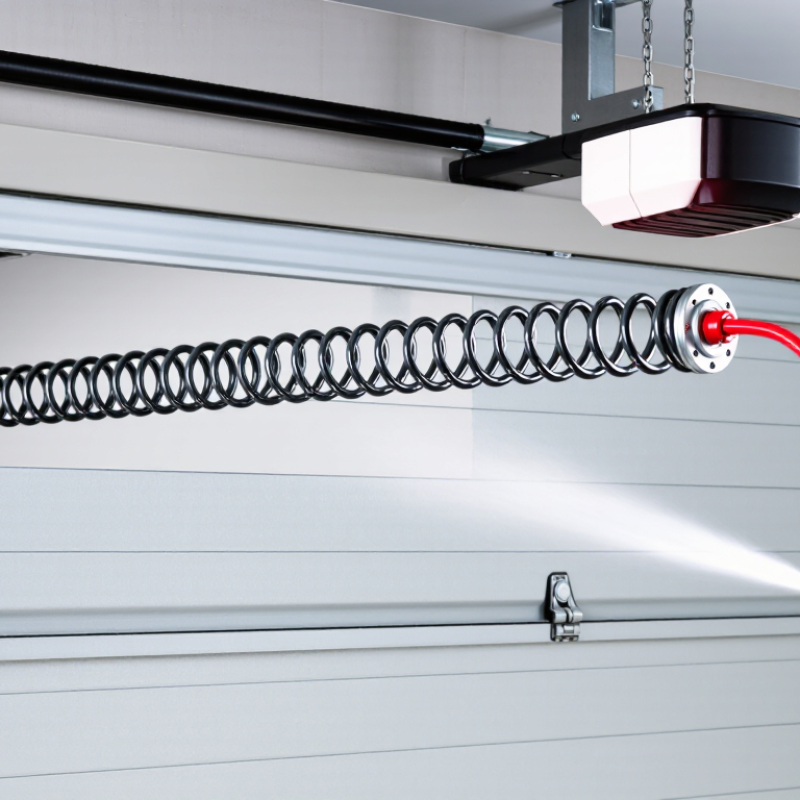
Before lubricating a sectional door spring, identify its type and inspect its condition. A torsion spring sits above the closed door, wrapped around a metal shaft. Extension springs run beside the horizontal tracks. Their locations require different safety checks.
Look for rust, broken coils, stretched gaps, loose brackets, or frayed cables. A dark, dry surface usually needs lubrication, but deep corrosion may signal replacement. Never touch a spring that appears cracked or separated. Stored tension can cause serious injury. Keep your hands away from winding cones, cables, and mounting hardware. A practical check is to open the door manually only if it moves smoothly and safely. Resistance, scraping, or sudden dropping needs professional assessment.
For a healthy spring, use a light garage-door lubricant on the coils. Apply a narrow coat while moving the door slowly by hand, if the system is safe to operate. Avoid heavy grease, which collects dust and can hide damage. Lubricate the spring, bearings, and hinge points lightly, but do not spray the track. The rollers should contact the track without slipping. Over-lubrication is an easy mistake. More product does not mean better protection.
Inspect again after a few cycles. Watch for fresh metal dust, uneven movement, or new noise. Even a careful inspection can miss internal fatigue, so uncertain conditions deserve qualified service.
Before lubricating, identify whether the door uses a torsion spring above the door or extension springs along the horizontal tracks. Check for rust, broken coils, stretched gaps, deformation, or unusual noise. Apply a light garage-door lubricant evenly across the spring coils, then operate the door several times to distribute it. Cycle ratings are nominal operating-life categories, not guarantees; never adjust or remove a spring under tension.
Before touching a sectional door spring, gather the right lubricant and safety equipment. Choose a garage-door lubricant labeled for metal springs, hinges, and bearings. Silicone spray or white lithium grease usually works well. Avoid thick household grease, cooking oil, and water-displacing sprays. They may collect dust or leave the coils sticky.
Wear safety glasses, cut-resistant gloves, and sturdy closed-toe shoes. Keep a stable flashlight nearby. Disconnect the automatic opener and secure the door in its closed position.
Never loosen cones, cables, brackets, or winding hardware. These parts can hold dangerous tension. A second person can watch the door, but they should stay clear of moving components.
Use a small amount of lubricant on the spring coils, then move the door slowly by hand if the system is safe to operate. Spray hinges and bearing points lightly, but keep lubricant away from tracks and the floor. Wipe away drips immediately. The track guides the rollers; it does not need grease. Less is better here. Too much product attracts grit and may hide wear.
Check the spring for rust, gaps, stretched coils, or unusual noise. If anything looks damaged, stop. A manual may recommend a different product or procedure, and that detail matters. I used to think more lubricant meant smoother operation. That assumption was wrong. Lubrication cannot repair a weakened spring, loose cable, or bent support. When tension hardware needs adjustment, contact a qualified door technician instead.
Before applying lubricant, prepare the door and spring assembly carefully. Close the sectional door completely, then disconnect the automatic opener from power. This prevents unexpected movement during inspection. Wear safety glasses and keep children away from the work area. Examine the spring, brackets, cables, drums, and mounting points for rust, gaps, or unusual bends. Never loosen hardware or attempt to adjust a spring under tension.
Remove loose dust with a dry cloth. Do not scrape deeply into the coils. A clean surface helps the lubricant spread evenly and reveals damage that grease could hide. Use a lubricant made for garage door mechanisms, applying a light coat along the spring coils. Avoid soaking the assembly. Excess product can collect dust and run onto the door panels. A small mistake is easy to make here: more lubricant does not mean better protection.
Tips: Check the door manually after reconnecting the opener. It should move smoothly and remain balanced at mid-height. Listen for grinding, popping, or sudden resistance. Stop immediately if these signs appear. Lubrication cannot repair a stretched spring, frayed cable, cracked bracket, or loose mounting point. In practice, careful preparation often matters more than the spray itself. If the spring assembly looks damaged or unfamiliar, contact a qualified door technician instead of experimenting.
The best way to lubricate a sectional door spring is to work carefully with the door fully closed. This position reduces spring tension and limits unexpected movement. Disconnect the automatic opener before starting. Keep fingers away from coils, cables, and brackets.
Use a garage-door-rated spray lubricant or a light silicone-based product. Apply a thin coat along the spring’s coils, turning the nozzle slowly as you move from one end to the other. Do not flood the spring. Excess lubricant attracts dust and may drip onto the door panels. Wipe away loose residue with a clean cloth.
Lubricate the hinges, roller bearings, and bearing plates as well. Spray the hinge pivot points, not the plastic roller surfaces. Apply a small amount where the rollers turn inside their brackets. The tracks should stay dry; lubricant there can collect grit and cause rough movement. Listen during the first few door cycles. Squeaking may improve immediately, but grinding, binding, or uneven lifting needs professional inspection. A spring can look harmless while holding serious stored energy. I once underestimated a “minor” noise; the real issue was a worn hinge, not a dry spring. Repeating the same spray would have solved nothing. Inspect the cables and mounting hardware, but never adjust, remove, or unwind the spring yourself.
| Component or Area | Recommended Lubricant | Application Method | Suggested Frequency | Important Notes |
|---|---|---|---|---|
| Torsion spring coils | Garage-door or light machine oil formulated for metal components | Close the door, place a small amount along the top of the coils, and operate the door several times to distribute the oil. | About every 3–6 months, or when the coils appear dry or noisy | Do not remove, loosen, or adjust the spring, winding cones, or set screws. The spring is under high tension. |
| Extension springs | Light metal-component oil | Apply a thin film to accessible spring coils only while the door is fully closed. | About every 3–6 months | Keep clear of safety cables and pulleys. Have a qualified technician handle damaged, stretched, or disconnected springs. |
| Hinges | Light machine oil or a suitable garage-door lubricant | Place one or two drops at each hinge pivot. Wipe away excess oil. | Every 6–12 months, or when movement becomes noisy | Avoid coating the door panels because oil can attract dust and leave stains. |
| Steel rollers with bearings | Light machine oil or a compatible bearing lubricant | Apply a small drop to the bearing area without flooding the roller or track. | Every 6–12 months | Some rollers are sealed and require no lubrication. Replace worn or excessively noisy rollers when necessary. |
| Nylon rollers | Usually no lubricant on the nylon wheel; use only a small amount on an exposed metal bearing if specified by the manufacturer. | Inspect and clean gently; do not spray the wheel surface. | Inspect every 6–12 months | Oil on nylon or on the track can attract grit and cause slipping or premature wear. |
| Roller tracks | No routine lubricant | Wipe tracks clean with a dry cloth; remove dirt and obstructions. | Inspect every 3–6 months | Do not grease or oil the tracks. Lubricant can collect debris and interfere with roller movement. |
| Bearings and end plates | Light machine oil, only where accessible and appropriate | Apply sparingly to exposed bearing points without disassembling the assembly. | During scheduled maintenance or when squeaking occurs | Grinding, binding, or visible wear requires professional inspection rather than additional lubricant. |
| Lock bars and latch mechanisms | Dry PTFE or graphite-type lubricant, when compatible with the mechanism | Apply a small amount to the moving contact points and operate the lock several times. | Once or twice per year | Keep lubricant away from the floor, door seals, and painted surfaces. |
| Drive chain or screw rail, if equipped | Lubricant specified for the opener mechanism | Follow the opener manual and apply only the stated amount. | According to the opener’s maintenance instructions | Do not lubricate a belt drive unless the instructions specifically require it. |
A sectional door spring needs light, even lubrication rather than a thick coating. In my experience, a few drops of garage-door lubricant on each spring coil reduce squeaking and surface friction. Work across the visible coils with the door closed. Keep the spray away from the tracks, cables, and floor.
Test the door before and after lubricating it. Pull the emergency release only while the door is fully closed. Lift the door by hand to waist height, then pause. A balanced door should remain nearly still. If it drops, rises, or feels unusually heavy, stop testing. The spring may need professional adjustment. Never stretch, remove, or tighten a spring yourself.
Watch the movement closely. Does the door shudder near the top? Do the rollers scrape? These details can reveal worn parts that lubricant cannot fix. I once treated a noisy spring and assumed the problem was solved. The noise returned because a hinge was loose. That mistake taught me to inspect the entire system, not just the spring.
Schedule a spring inspection twice a year, especially before winter. Wipe away excess lubricant and look for rust, gaps, or distorted coils. A simple maintenance record can note the date, sound, balance, and visible changes. If the door becomes difficult to lift, stop using it until a trained technician checks the mechanism.
A torsion spring sits above the closed door, wrapped around a metal shaft. Extension springs run beside the horizontal tracks. Their locations require different safety checks.
Check for rust, broken coils, stretched gaps, loose brackets, and frayed cables. Deep corrosion may indicate replacement is needed. Do not touch cracked or separated springs.
Close the door completely and disconnect the automatic opener from power. Wear safety glasses. Keep children away from the work area. Never loosen spring hardware.
Use a light lubricant designed for garage door mechanisms. Apply a narrow coat along the spring coils. Heavy grease collects dust and may hide damage.
Use only a light coat. More product does not mean better protection. Excess lubricant can run onto door panels and collect dirt.
Do not spray the track. Lubricate the spring, bearings, and hinge points lightly. Rollers should contact the track without slipping.
Test it only if the system appears safe and moves smoothly. After reconnecting power, check whether it stays balanced at mid-height. Stop if it scrapes, grinds, pops, or drops suddenly.
Stop the inspection and avoid touching the spring, cables, cones, or brackets. Contact a qualified door technician. Lubrication cannot repair structural damage.
Watch the door through several cycles. Look for fresh metal dust, uneven movement, or new noise. A careful inspection can still miss hidden fatigue, so uncertainty deserves professional assessment.
Learning how to lubricate a sectional overhead door spring begins with identifying the spring assembly and inspecting it for rust, cracks, loosened hardware, or other damage. If the spring appears severely worn or broken, avoid handling it and seek professional assistance. Before lubrication, gather a suitable garage-door lubricant, protective gloves, safety glasses, and a stable work area. Disconnect automatic operation if applicable, close the door, and keep people and objects away from the moving parts.
Clean away loose dirt, then apply a light, even coat of lubricant to the spring coils and related moving points, such as hinges, rollers, and bearing areas. Avoid excessive spraying, which can attract dust or drip onto the door. Open and close the door carefully several times to distribute the lubricant and check for smooth, balanced movement, unusual sounds, or resistance. Wipe away excess product and include spring inspection and lubrication in a routine maintenance schedule. Since springs are under high tension, never attempt to adjust, remove, or replace them without proper training.
